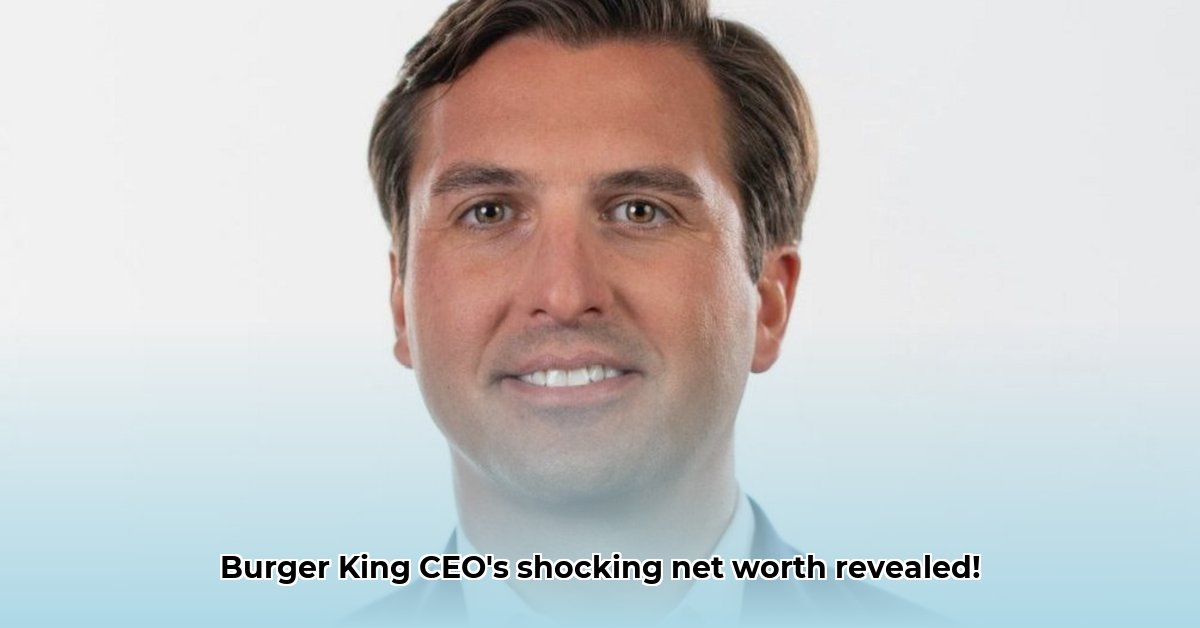
The aroma of flame-broiled burgers often masks a stark reality within the fast-food industry: a massive chasm between CEO compensation and employee wages. This article delves into the financial landscape of Burger King, examining the substantial net worth amassed by its former CEO, José Cil, and current CEO, Joshua Kobza, and contrasting it with the comparatively modest earnings of its employees. We will explore the ethical implications of this significant pay disparity and analyze its impact on the industry.
José Cil's Burger King Legacy: Executive Compensation at a Glance
José Cil, former CEO of Restaurant Brands International (RBI), Burger King's parent company, left his position with a reported net worth exceeding $37.3 million. A significant portion of this wealth, over $20 million, stemmed directly from his RBI salary. Stock options and other financial benefits further augmented his compensation, illustrating the substantial financial rewards often associated with top executive roles in large corporations. This raises a critical question: how does this compare to the compensation of Burger King's workforce?
Joshua Kobza's Leadership: Continuing the Compensation Trend?
Joshua Kobza assumed the CEO role in 2023. Given his long tenure within RBI, his compensation package likely mirrors the generous structure of his predecessor's. While precise figures for Kobza's net worth remain undisclosed, we can anticipate a similarly substantial compensation reflecting the high-level executive position in a major multinational organization. This begs the question of whether such a significant wage disparity is sustainable and ethical in the long term.
Behind the Counter: Examining Burger King Employee Wages
Shifting focus to the employees who form the backbone of Burger King's operations, we find a stark contrast. Entry-level positions, such as cooks and cashiers, typically start near the minimum wage (often around $9 per hour). While assistant and general managers earn slightly higher hourly wages in the $12-$13 range, and district managers receive greater annual salaries – around $66,400 – when compared with the multi-million-dollar compensation packages of CEOs, the disparity is undeniable. This discrepancy raises concerns about fair compensation and the societal implications of income inequality.
The Widening Gap: A Stark Comparison
The difference between a CEO’s multi-million dollar net worth and the hourly wages of Burger King employees is striking. While Cil's oversight of three significant brands might justify a high compensation, the lack of complete transparency regarding the actual breakdown of these compensation packages makes it challenging to fully assess its fairness. The absence of a detailed public explanation for this significant wage gap further exacerbates concerns about fair treatment and corporate responsibility.
Industry Benchmarks: A Necessary Point of Reference
To fully grasp the extent of this pay disparity, a comparative analysis with competing fast-food chains like McDonald's and Wendy's is crucial. Such a comparison would reveal whether Burger King's compensation structure is an anomaly or reflects broader industry trends. Unfortunately, readily accessible and comprehensive data for this type of comparative analysis is currently limited, hindering a thorough assessment of Burger King's practices within the industry context.
Beyond the Numbers: Ethical and Social Implications
The massive pay gap at Burger King highlights the broader societal crisis of income inequality. The fast-food industry, often criticized for its low wages and high employee turnover, serves as a stark reminder of this persistent issue. The ethical dilemma is clear: how do companies balance massive profits with low employee compensation? This impact on employee morale, retention and the overall societal perception of the company, raises fundamental questions about corporate social responsibility.
The Need for Transparency and Further Research
The lack of readily available, comprehensive data—as highlighted earlier—underlines a significant issue regarding transparency within the fast-food sector. Until more robust and publicly available data becomes accessible, a complete and fully accurate picture of CEO compensation versus employee wages remains elusive. Further, rigorous, and independent research is clearly needed. Without complete data, a truly thorough analysis is impossible.
Looking Ahead: Toward a More Equitable Future
The significant pay gap at Burger King underscores the urgent need for a deeper examination of compensation structures within the fast-food industry. Further investigation is essential to fully understand the scope of this issue and identify effective solutions. Increased transparency, industry-wide standards for fair compensation, and perhaps even regulatory intervention may be necessary to address this persistent imbalance. This is a systemic problem that extends beyond Burger King, demanding a wider societal conversation about fair wages, corporate accountability, and equitable wealth distribution.